32,000 images submitted in two weeks?

•November 16, 2009 • 3 Comments

Picture 2

Stock photography. Technology is turning the business upside down.

You might know that I had intended on submitting my photos to Getty, that is until they announced their Premium Access License. PAL allows a customer to subscribe to the photo service and download images at a greatly reduced rate from regular stock pricing.

Theoretically, a photo that I drove four hours for, spending money on transportation, food, etc. could be sold to a major publisher for a couple of bucks.  That really was the straw that broke the camels back for me. Luckily I had only a few images there and found out about Getty’s plan before I had committed.

Already there are over 12,000 members in the Getty/Flickr group. To streamline the process of submitting images, there is now a group where members can post to the group. The photos are then reviewed by editors and so it goes.

The group is only two weeks old. When I logged on this morning to see what was being posted, my jaw dropped, well not really but what a surprise!  32,691 images had been submitted in two weeks. Of course the great majority of them will never make it into the system but how do you think your images will look or standout in a group of over 32,000 photos?

Third world labor. That is where stock photography is slowly going. I don’t think it will take too long before long established photographers will stop relying on stock for income and have to be more diverse. In the current edition of Photolife magazine, stock shooter Daryl Benson writes that stock represents close to 50% of his income and it’s dropping rapidly. To quote Daryl, “I also write articles, publish books and calendars, sell prints, give seminars and photography workshops, do book signings every Christmas, and am the general handyman and stock boy at my daughters’ scrapbook store.”

So there it. I know when I decided to follow a path in photography many years ago, I did it because I loved to shoot and I made a good dollar at it. It seems nowadays you need to do these peripheral things to be able to support your shooting, not the other way around. Most everything is in a state of flux, never remaining the same.

Good? Bad? It depends upon what you want in a career of photography. I would still recommend to most everyone starting out, get an enjoyable well paying job and use that to supplement your income. You don’t want to be approaching retirement, it happens quickly and find out that living the life all those years with a camera came at the cost of a not so golden twilight.

THIRTY TWO THOUSAND IMAGES!!!!!! and growing….

Happy shooting and do it because you love it,

Dan


Using the right tools for the job…

•November 11, 2009 • 2 Comments

wordpress


When I used to take photos for a living my camera gear became second nature to me. Using something everyday garners a familiarity that the occasional user doesn’t see.

Visit a photography website, either a hobbyist or read a photography magazine and most of what you will read is about equipment. It’s not that equipment isn’t important but it’s the smallest part of the equation in getting a fine image.

Believe it or not, advertiser play a huge role in determining how large a publication will be. Editorial space is always determined by the number of ads.. Incur the wrath of a major advertiser and revenue drops. The publication shrinks.

Do you want to see a really critical review of a product? Go to Consumer Reports or an independent website that is NOT ad driven.

So it was today when I read on a product blog that a photographer could not get natural and inherently pleasing results with HDR and as a result was using some very expensive filters to get her the results she wanted, I took that with a GIANT grain of salt.

I have nothing to sell. I have a set of graduated ND filters and I have Photomatix a program which is used in creating HDR images. I think I am unbiased when I say, that the above mentioned photographer doesn’t know how to properly process images to get “natural and inherently pleasing” results.

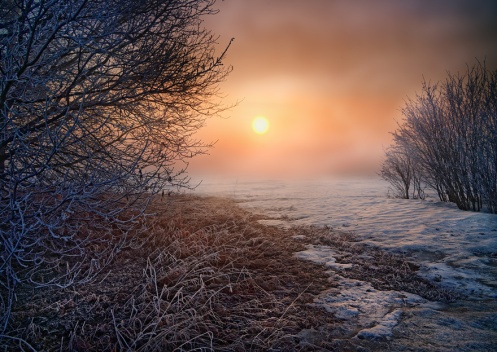
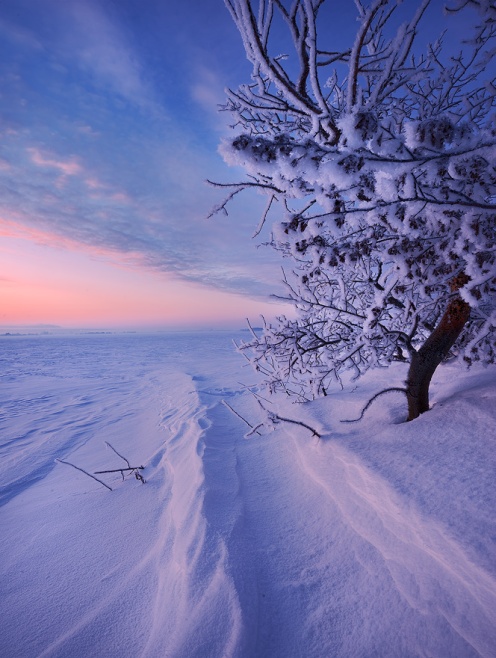
The winter shot at the top of this blog is a blend of three exposures. SHOCKER!!!! What you say? Why doesn’t it look like a cartoon or have a black sky with halos around the edges of the trees and fence post? HDRs can look like cartoons if you pull the sliders to the extreme limits. I was as guilty as anyone when I first started using the program. After six months of over-processing, I got tired of the novel look and it started looking really bad to my eye.

A well done HDR should NOT look like an HDR whatever that means. It should look like a well lit, well exposed scene.

There is a tool for everything. This scene definitely did not call for a graduated ND filter. Under some conditions they work extremely well but not here. Why? The graduated ND filter would have darkened the sky and sun, we want that. The same filter would have also made the top of the fence post almost black. We don’t want that.

HDR is great at capturing extremes of light. What it is not good at is handling motion. Between three exposure or how ever many you use, whatever motion there is between exposures of the subject matter has can ruin the shot. HDR is not good when there are strong winds or if something in the foreground is moving in a breeze. Photomatix tries to fix it but does a poor job of judging how to handle the movement.

Don’t be misled by blogs whose intent is only to sell a product. What is the endorser getting out of writing for a product blog? Well, how about recognition? Free advertising?

Filters are just another tool in your camera bag. They won’t make a quantum difference in how your photos look. They’ll polish them up a little bit.

Learn to be a good photographer by paying attention to light and composition. Realize that not every time of the day is the right time to take photos.

A great set of paint brushes won’t create a masterpiece for you and so it also goes for photo equipment.

Happy shooting,

Dan

What kind of stock photography is in demand?

•November 9, 2009 • Leave a Comment

Even though I will not be submitting anymore images to Getty because of their Premium Access Licensing, I still lurk the forums to see how things are going, who’s complaining and what is selling.

Remember that this is the largest and most successful agency in the world. It’s not always the best for an artist to be with the largest. It is too easy to get lost in the crowd.

Getty started another private forum where members can submit images by posting them to the group for approval. In less than a week there are over 12,000 images. Each member is allowed to contribute 5o images a week. Browsing the group is an exercise in what is being offered an also what it takes to stand apart from the crowd. Ninety percent of the photos easily are ho hum and don’t merit a second glance. People really need to learn how to edit their work. It wastes an editors time to go through fifty photos to see half of them are similar versions of the same subject.

Getty is also posting a Twitter feed where they daily or hourly post their requests or demands for photos. It’s informative to say the least. Check it out if you want to see what  is needed or selling?

Happy shooting,

Dan

Forgetting about business and just having fun

•November 8, 2009 • 3 Comments

wordpress

The past few posts I’ve made here have been more about the business side of photography than the photography itself. As with most things in life there are two sides.

Today is about what makes shooting landscapes so much fun.

Marmot Basin in Jasper National Park is scheduled to open for downhill skiing this Wednesday, November 11. It is their earliest opening ever. Check out their ski cams to get an idea of how much snow is at the higher elevations. They’ve been getting snow for a few days up high and with the upgraded snow making equipment, they’re winter season is almost here.

For those of us who go to the mountain parks to shoot pictures, the snow will be a little later in coming although, I remember many years ago when I was assigned to photograph Christmas in November at the Jasper Park Lodge my wife and i drove out in mid November in blizzard conditions. In the lodge’s parking lot the snow was easily knee deep. The Yellowhead Highway was so bad they closed it on the drive out at the park gates and we stayed overnight in Hinton. Unfortunately, that was during the twenty years of adulthood that I had totally lost interests in landscape photography.

There must have been some great photo opportunities that weekend.

That is one of the fun things about shooting landscapes, the more inclement the weather the more interesting photos become.

There are a ton of fair weather photographers out there and it makes sense. You want to be outdoors and record your travels. Not many families want to be outside in a snowstorm or up early for a sunrise.

Nope, the lower elevations won’t be covered in snow unless the big storm comes soon but the parks still can be photographed. That is one of the joys of photography, having to look or hunt for my pictures. It’s pretty much the opposite of the workshops or photo tours I wrote about the other day. I’d rather discover things on my own rather than be led around and shown what and where to shoot.

There’s nothing wrong whichever way you do it. It’s just great to be outdoors. In the mountains. On the prairies. In the woods. Get out there and if you don’t bring back any photos, is that such a bad thing?

Happy shooting,

Dan


Photography Workshops

•November 7, 2009 • Leave a Comment

I get many emails asking me if I offer photography workshops and the answer remains the same. No.

This September I was in Jasper National Park taking photos near the outlet of the Maligne River on Medicine Lake. I had been up before the sun and trying to get a morning shot of the kind of yellow foliage while the light was low on the sky.

After a couple of hours when the sun had risen too high for my liking, I headed back to the Rav. Just as I was climbing up the embankment to get to the highway, I could hear a vehicle stop. That was unusual because there wasn’t any roadside pullout where I was parked and the first thing that comes to mind is vandalism.

So, I rushed up hill and what should I see but three adults get out of a vehicle.  The two older people, it looked like a husband and wife had cameras. The youngest of the group, a bearded man in his early thirties, I am guessing was talking to them. I wasn’t paying attention to them as I got my breath back and loaded my gear into my vehicle.

The couple pointed their cameras through the trees towards Medicine Lake and snapped a few frames. Without exploring any further they got into their van and headed off.

Was this a photography workshop or tour? From the body language of the small group, it definitely didn’t seem like the people were friends. Things seemed a bit formal or quiet.

I didn’t give it much thought other than that if photography was the purpose of the couples trip and not sight seeing, they weren’t getting their moneys worth.

So I got to thinking, what would I want from a photography workshop? Depending experience, we all have different needs. What would I want in a workshop if I was new to photography?

I think I would want to see my instructor taking photos. Choosing lenses, angle, light, etc. and be explaining the whys and wherefores while I shot along with him or her.

You really can learn a lot by studying someones photos. Much more than you might imagine. There is also much more that you can learn and so much quicker by seeing the photographer work.

When I took a two year photography course back in the seventies, a part of the course was work experience. This was where we spent time with an established photographer for a little while. Classrooms and books teach can only teach so much theory. To see someone put that theory into practice is a perfect complement to the books. It fills in the blanks.

Unless the guide the couple I saw that September morning was a tour guide only, I would have been disappointed for the services being supplied. If he was only a tour guide, he was doing an average guide. Any one can drive alongside the highway and stop. Save yourselves a few hundred dollars on the guiding and get some prints made or something like that.

There is a very funny thread going on over at another landscape photography blog this week. A case of the pot calling the kettle black. It’s all to do with someone criticizing the photos from a photography workshop. The blog owner, also the teacher of the workshop was clever, err, kind  enough to post a link to the person critical of the photographs. It turns out that he too, offers photography workshops.

The posts that followed had me smiling. You know the old saw, those that live in glass houses shouldn’t throw stones? It applies in this case. Too funny.

Although it’s a good idea to look at a photographers body of work before you sign up for a workshop, that is not always indicative of how good a teacher they will be. Some teachers a blessed with an innate skill to make the foggy, obvious. To make the difficult appear simple.

And it is also true of the opposite. I’d be inclined to look for someone who takes great photos and take my chances that I might have some of their technique rub off on me.

Is this an introduction to my photography workshops? No. With a full time job designing and shooting during my spare time, teaching is the last thing on my mind. When I retire? I’d seriously think about it.

When I shot fashion and still life, I mentored photographers from the local photo school and really liked it. It was great to share what I knew with others who were learning like I was only a few years earlier. I did find that by verbalizing what I was doing, it became clear to me why I did things a certain way. Before it was an automatic thing. Never stopping to wonder why a light was placed here or an object was placed there in my composition

It’s 7:00 am on a Saturday and I am out the door for my girls volleyball tournament this morning. Another sunrise lost but what does that matter when compared to watching your children grow up?

Happy shooting and just generally living,

Dan

So you wanna be a professional landscape photographer?

•November 6, 2009 • Leave a Comment

wordpress

Sound glamorous doesn’t it? Travel the world. Visit exotic places. Get published internationally.

That was what I had in mind when I first became interested in photography. That was in the early seventies. I got side tracked and ended up in photography but shooting things NOT landscape related.

I am back shooting landscapes and I couldn’t be happier. My only regret is that I ignored landscapes COMPLETELY. To do it all over again, I would have chosen the same path.

Back in the day, it was the professional photographers that were doing the most interesting and creative work. Not anymore. Visit the many photo forums that are a mouse click away on your computer and you’ll be amazed and impressed by the variety of images.

There is only one full time professional photographer that I’ve stumbled across that continues to innovate and create. That is Marc Adamus. In a recent example of his creative genius he presented a few combined twilight, sunset, night time photos. Of course what followed was predictable and funny. Images like his started popping up on photography forums. The truly creative person is not the one who copies but the one who innovates. Marc is blessed with not only creativity but a solid work ethic.

He will be mentioned in future years in the same breath as some of our photo landscape giants. The same can’t be said for so many other contemporary landscape photographers.

Check out the websites of many of the full time pros and you get an idea of what it takes to make a living shooting landscapes. It’s not as simple as going out into the wilderness and capturing sunsets. Today being a full time professional means for many, that the majority of their time is spent not in the field but doing things to supplement their photography.

Sounds glamorous doesn’t it? I admire those who have stuck with it through the years. It can’t be easy being in a profession that is quickly becoming diluted by high quality cheap images from amateurs. From the seminars, to workshops, to tours to writing what time is left for photography? And then when you go to sell your work, you find the market flooded with high quality low priced photos shot by amateurs who can afford to be paid next to nothing because this isn’t their primary income source. It’s gotta be frustrating.

I’ve preached to my kids so many times, whatever it is you love to do, leave as a hobby. Never make it your career. Get a career that you enjoy and affords you plenty of time and money to do what you love.  Avoid the short term fun and instead grab the long term gain.

You don’t want to be in your fifties, close to retirement and still living a pauper’s life. Or do you? I know that’s not for me. The starving artist has never been an appealing carer choice.

Happy shooting,

Dan

Goodbye Gettyimages

•November 5, 2009 • 1 Comment

I made the decision to pull the plug on Gettyimages.

What started out as looking like a great deal for photographers on Flickr fizzled away with the announcement that their Premium Access Licensing was becoming mandatory for images in the Getty/Flickr group.

Reading the forums is disconcerting. By being short sighted and seemingly delighted that anyone would want to use, let alone pay to use their photos the majority of members seem fine with it the new agreement.

Does this sound like fair and equitable payment for a photo? A large publisher, let’s use Time magazine for example, pays a subscription price to download a set number of images during the subscription period. Looking for photos for a spread for their next issue they spot your image. You spent a day setting it up or traveled to the mountains just to take this shot. Or perhaps you paid a model to pose for your shoot. Whatever, you’re out cash.

Time picks your photo and it runs a full page. You get maybe $3.00. That number was thrown around on the forum and the Getty editors said it was possible. Likely? Unlikely? I don’t know but it’s possible.

Great deal huh? Your Rights Managed image has now been published which means that anyone else thinking of using it might pass because it was used nationally. You lose the sale. Who profits in that situation? Not you the artist.

There is or was a class action lawsuit launched by professional stock photographers last October and I can’t find out if there has been a settlement. I’ve got an email in to the lawyer that represented the artists and have not heard back. The photographers are claiming that when they entered into agreement with Getty that the Premium Access Licensing violates their original agreement. Their Rights Managed images have become less valuable and as a result they’ve lost potential income.

If I had more photos with Getty I would pursue this but because there are so few there, I’m content to let the term run it’s course and pull my images. If I had hundreds or thousand of images, it would be a different matter. Income loss would be much more. Me hiring a lawyer against the largest photo agency in the world over a few pics? Forget it. Not worth it.

But all the images that I had submitted and were approved by Getty, they will never see the light of day on Getty’s website.

As a photographer or as a working person, you have a choice in where you work and what you will be satisfied with. For all those amateurs with professional dreams in their eyes by being with Getty, you’ve just shot yourself in the foot by remaining. As long as people accept what Getty is forcing upon them, Getty has the power.

I prefer to be in control of my destiny and not blindly accept what is good for a large corporation just to get my pretty pictures published. It’s as simple as that.

Happy shooting,

Dan

Killing the goose that lays the golden egg or why I am probably quitting Getty

•November 3, 2009 • 1 Comment

A few weeks ago I made the decision to start submitting most of my work to the new Getty/Flickr stock agency.

I only had a few images there and they were images that were rejected by the other two agencies I am with. An interesting thing happened. Within a couple of weeks, one of the images had sold for a decent amount.  Write that off to odds. Once in a while that happens.

But I lurk the Getty/Flickr forums and one of the threads was about what was selling and for how much. I was amazed to see what was selling and for how much. I followed the thread over the course of the past couple of months and there were more and more reports about successful sales.

It was then that I decided that my next batch of images or next few batches of images would be submitted to Getty/Flickr. I would be able to see in a few months if it made more sense or cents to switch to them as my main agency.

That was until today. There was a post by one of the moderators that images on the Flickr collection would now be available to customers on a subscription basis. The moderator on there was very, very vague about what that meant in terms of real dollars to the artist an purposely I think.

Here is my understanding of the system. A client such as a magazine or newspaper chain pays a month or periodic subscription fee. They are allowed to download photos at a price per picture much less than they would if they were to buy the photos individually.

So in theory as one of the posters suggested and it wasn’t rebuffed by the moderator, you could have one of your photos in a major magazine and only get paid a couple of dollars for it. Sounds like a great arrangement for the customer. Getty increases their volume on sales and ultimately dollars and the artist, well, where does that leave the artist?

From how I see things it is as simple as supply and demand. Too much supply for too little demand. The artist gets less and less. You can’t fault Getty in this. The artist’s welfare is not their concern. Their concern is to maximize profit. Henry Ford got rich by having cars produced on assembly line instead of being built by hand one at a time. This is where stock photography is headed.

There will always be photographers who by virtue of their reputation and hard work that can charge a premium for their work. On average, the value of a stock photograph will be driven down by this business model.

I haven’t pulled the plug on Getty/Flickr yet. I am going to give this a few days to think it through. Maybe I am missing something in all of this?

Happy shooting,

Dan

Everyone lives in the mountains, or so it seems

•November 3, 2009 • 2 Comments

wordpress

It’s 7:00 am and I spent the last half hour reading online, checking email and browsing some of my favorite photo forums. I want to talk about the latter this morning.

Everyone it seems, lives in the mountains or on the coast. That’s the conclusion you would come to by browsing the naturephotographers or photo.net website. Almost every landscape posted there seems to taken in the mountains or on the coast.

Everyone who has a camera wants to make a few dollars from it. Photography has never been easier or more accessible. But do you want to compete against a million very competent photographers with the same subject matter?

In the Getty/Flickr group I belong to, the editors from Getty have made it abundantly clear that unless what you are offering is head and shoulders better than the hundreds of thousands of ocean and mountain images, they don’t want to see any more. They are looking for the different and the new.

Commercially, it’s a tough slog to make a half decent living shooting mountains and oceans. There is an oversupply of those images in a limited market.

What do you shoot? You shoot your back yard. Your immediate access to where you live gives you the advantage when interesting or unique weather rolls in. In the rockies, you are forced to take what is there. Be choosy and you might not come home with anything.

On another note, in the future what will be interesting to viewers is your part of the world. The national parks are protected. They’re not going to change much in the next generation. Where I live, old farm buildings are falling down, never to be seen again. A couple of generations of history is disappearing with the changes of the seasons. In the few short years since I’ve returned to photography, I’ve already seen evidence of this. Granaries that were leaning into the wind for a photo are now a heap of sticks in the grass.

You are sitting on a treasure. It’s yours to discover and by shooting in less than spectacular places, you will become a better photographer. Try and shoot around home and you will find the challenges more difficult but also more rewarding.

Happy shooting,

Dan

Selling prints online

•October 31, 2009 • 2 Comments

Occasionally I get requests for prints of photos on my personal website or my Flickr photostream and until now, I had never seriously thought about doing so.

I’ve had a few of my photos made into large prints out of curiosity to see how well they held up at 20×24 and was amazed at the detail but was not impressed by the density and contrast of the print I got back from the printer. It’s a problem of monitor calibration.

I have a calibration system on my iMac. It’s necessary for any work you intend to send away. If you don’t calibrate, you are taking the risk that what looks great on your screen might not look so good on the other end. Too dark. Too light. Pink. Green. Flat. Contrasty. Don’t calibrate and the people viewing your photos probably aren’t seeing what you are.

My calibration was obviously different than my printer in Toronto. My prints always came back dark. I know from the days that I used to print my own photos in a wet darkroom that only I could make a print look the way I wanted it too.

I am thinking of buying a large format printer and am trying to justify it. To do that means being able to sell online and selling online means one click shopping. To do that I have to redesign my website and that’s a commitment of more time.

I’m interested in anyone who sells their work directly. When you send your files to a printer, you lose control over what your customer is getting. You never want to do that. Control over the final print is as important as how you shoot and process your photos.

Anyway, I am seriously thinking of taking the plunge and would be curious to hear of others experiences with printing and selling.

Happy shooting,

Dan